EQUIPMENT & STANDARDIZATION
RULEBOOK
The World Airsoft Games represent the highest competitive platform in global airsoft. The event brings together elite teams from around the world to compete under a unified, professional, and internationally recognised standard of equipment and gameplay regulations. This rulebook establishes the mandatory requirements for all equipment, uniforms, weapons, accessories, safety systems, and identification markers used by players during the World Airsoft Games 2026.
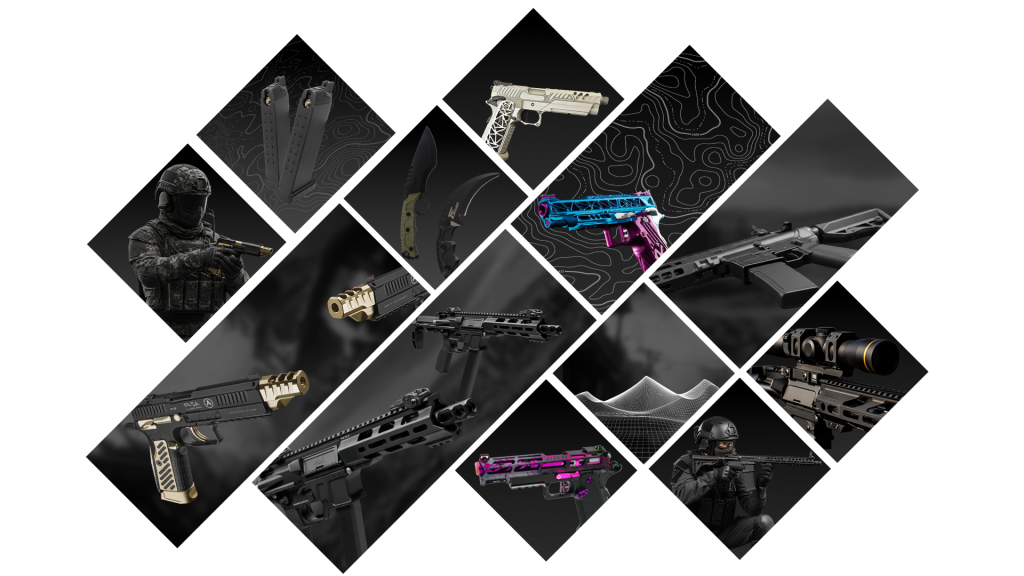
EQUIPMENT & STANDARDIZATION RULEBOOK
Table of Contents
3 DEFINITIONS & ABBREVIATIONS. 1
4 UNIFORM & PLAYER APPEARANCE REQUIREMENTS. 1
8 WEAPON CLASSIFICATION & SPECIFICATIONS. 1
9 JOULE LIMITS & MINIMUM ENGAGEMENT DISTANCES. 1
10 TRACER SYSTEM REQUIREMENTS (FULL EXPANSION) 1
12 GRENADES, SHIELDS & MELEE WEAPONS. 1
13 ACCESSORIES & ATTACHMENTS. 1
14 COMMUNICATIONS EQUIPMENT RULES. 1
15 SAFETY STANDARDS & ENVIRONMENTAL REQUIREMENTS. 1
16 REFEREE AUTHORITY & INSPECTION PROCEDURES. 1
17 TEAM CAPTAIN RESPONSIBILITIES. 1
18 VIOLATIONS, PENALTIES & ENFORCEMENT. 1
20 ARENA ENTRY & EXIT PROCEDURES. 1
21 READY LINE & STAGING RULES. 1
22 POST-MATCH INSPECTION PROTOCOLS. 1
23 BROADCAST VISIBILITY STANDARDS. 1
24 TECHNICAL DIRECTOR & MARSHAL ESCALATION PROCEDURES. 1
APPENDICES A F (FULL EXPANSION) 1
APPENDIX A ILLUSTRATIVE EXAMPLES (TEXT DIAGRAMS) 1
APPENDIX B REFEREE SCENARIO CASES (FULL EXPANSION) 1
APPENDIX C TEAM COMPLIANCE CHECKLIST (PRINTABLE) 1
APPENDIX E EQUIPMENT INSPECTION FORMS. 1
APPENDIX F GLOSSARY OF TERMS & ABBREVIATIONS. 1
CHAPTER 1 INTRODUCTION
1.1 Overview of the World Airsoft Games
The World Airsoft Games (WAG / W.A.G.) represent the highest competitive platform in global airsoft. The event brings together elite teams from around the world to compete under a unified, professional, and internationally recognised standard of equipment and gameplay regulations.
This rulebook establishes the mandatory requirements for all equipment, uniforms, weapons, accessories, safety systems, and identification markers used by players during the World Airsoft Games 2026.
It is designed to:
Ensure competitive fairness
Uphold international safety standards
Maintain broadcast clarity and visibility
Provide consistent enforcement protocols for referees
Ensure all teams, regardless of country, adhere to a single unified standard
1.2 The Hybrid Professional + Tactical Standard
The WAG adopts a hybrid rulebook structure, combining:
Professional structure (International governing-body style)
Used for:
Legitimacy
Regulatory clarity
Legal compliance
International adoption
Tactical clarity (Law enforcement / special operations style)
Used for:
Fast interpretation under stress
Operational effectiveness
Clear communication for referees
Rapid team compliance
This approach ensures the WAG rulebook is both authoritative and practical for real-time competition.
1.3 Authority of This Document
This rulebook:
Applies to all players, coaches, substitutes, team captains, sta\, and referees
Is legally binding for all teams registered in the WAG
Supersedes national or regional rules used by local leagues
Cannot be modified without approval from the WAG Technical Directorate
All participants are responsible for understanding these rules. Ignorance does not exempt compliance.
1.4 Enforcement
Referees, marshals, and the WAG Technical Directorate have full authority to:
Enforce rules
Inspect equipment
Remove non-compliant items
Penalise teams or individuals
Disqualify players for safety violations
Decisions made by the Head Marshal are final.
1.5 Document Structure
This expanded rulebook is organised into:
Core Regulations (Chapters 1 17)
Enforcement & Operations (Chapters 18 24)
Appendices A F (Illustrations, Scenarios, Checklists, Glossary)
Each chapter provides detailed explanations, examples, and tactical justification for the equipment standards used in WAG 2026.
CHAPTER 2 PURPOSE & SCOPE
2.1 Purpose of the Equipment Standards
These standards exist to:
Safety
Ensure that all participants are protected from preventable injuries through strict equipment regulation.
Fairness
Prevent teams from gaining an unfair competitive advantage through non-standardised equipment or illegal modifications.
Visibility
Provide referees and broadcast media with a clear and consistent visual profile for all players, improving judgement accuracy and viewer experience.
International Uniformity
Unify global airsoft cultures under one professionally governed system.
Operational Discipline
Establish predictable, enforceable rules to ensure organised and efficient tournament operations.
2.2 Scope of Application
This rulebook applies to:
All competition phases
All arenas (tactical field, speedsoft arena, staging areas)
All players registered on a team roster
All coaches, substitutes, and off-field personnel
All referee and marshal inspections
All training sessions held inside WAG facilities
It covers:
Uniform standards
Patch and flag band regulations
Player numbering
Weapon specifications
Identification requirements
Accessories and attachments
Safety equipment
Communications gear
Grenades and shields
Chronographing and testing
Marshal authority and procedures
Gameplay rules are provided in a separate WAG document.
2.3 Legal & Regulatory Compliance
The WAG rulebook adheres to the following standards and requirements:
EU EN166 and ANSI Z87+ eye protection standards
UAE Tactical Sports and Events Safety Guidelines
International Airsoft FPS/Joule safety benchmarks
Venue safety compliance codes
Broadcast media requirements for identification and visibility
National regulations from participants home countries do not supersede WAG global standards.
2.4 Binding Agreement
By entering the tournament, every player and captain agrees to:
Comply with this rulebook
Submit to inspections
Accept penalties for violations
Ensure team-wide compliance
Non-compliance equals automatic removal from competition.
CHAPTER 3 DEFINITIONS & ABBREVIATIONS
This chapter defines all terminology used throughout the WAG Equipment & Standardization Rulebook. These terms ensure clarity, prevent misinterpretation, and standardise language for referees, broadcasters, and international teams.
3.1 Official Abbreviations W.A.G.
World Airsoft Games the governing body and the event.
MW
Main Weapon primary rifle-class airsoft gun meeting WAG specifications.
AW
Additional Weapon pistol-class secondary weapon meeting WAG specifications.
MED
Minimum Engagement Distance the mandatory minimum distance from which a weapon may be fired based on its Joule rating.
FPS
Feet Per Second velocity of a BB. Not used as a safety standard at WAG; Joule measurement is used instead.
HPA
High-Pressure Air system must be tournament locked at WAG.
AEG
Automatic Electric Gun electric airsoft gun using a gearbox.
GBB
Gas Blowback weapon gas-powered airsoft system.
CO2
Carbon dioxide-powered weapon system.
Tracer Unit
Device attached to barrel to illuminate BBs using UV light.
BB
6mm plastic projectile used in airsoft firearms.
Marshal / Referee
WAG-approved official responsible for rules enforcement.
DQ
Disqualification removal from match (temporary) or tournament (permanent).
Lock-Wire / Tournament Lock
Physical security system preventing adjustment of HPA or gas output after chrono testing.
Flag Band
WAG-issued right-arm country identification band.
Team Captain (TC)
Registered team leader responsible for ensuring compliance.
3.2 Definitions of Core Terms
3.2.1 Player
Any individual listed on the official WAG roster for a given team.
3.2.2 Equipment
All items worn, carried, or used by the player during competition.
3.2.3 Illegal Equipment Any item that:
exceeds Joule limits
provides unfair tactical advantage
violates WAG safety rules
is not explicitly permitted
3.2.4 Inspection
The formal evaluation of equipment by WAG marshals before, during, or after gameplay.
3.2.5 Ready Line
Designated area where players must be fully equipped and ready for inspection prior to entering the arena.
3.3 Interpretations
If any terminology is ambiguous, the Head Marshal has final interpretation authority.
CHAPTER 4 UNIFORM & PLAYER APPEARANCE REQUIREMENTS
4.1 Purpose of Uniform Regulation Uniform regulation ensures:
Equality: No tactical clothing advantage.
Identification: Referees must instantly identify team affiliation.
Consistency: All nations follow the same standard.
Safety: Clothing prevents abrasions, cuts, and impacts.
Broadcast Visibility: Clear colour uniformity improves camera tracking.
Uniform consistency is mandatory across all team members.
4.2 Team Colour Consistency Requirements
All players on a team must use matching colours for:
Tops (shirts, long sleeves, jerseys)
Bottoms (pants)
Load-bearing gear (vests, rigs, belts)
Helmets or headgear
Plate carriers / chest rigs
✔ Allowed variation:
Different brands and models are allowed as long as the colour tone is identical.
❌ Not allowed:
Mixed colours (e.g., one player OD, another tan)
Mixed patterns (e.g., Multicam vs. Tigerstripe)
WAG referees may request players to adjust or replace gear to maintain visual uniformity.
4.3 Approved Colour Sets
Only the following colour sets are allowed:
4.3.1 Tactical Camouflage Patterns
Multicam (any standard variant)
Woodland
Desert
Tigerstripe
AOR1 / AOR2
All team members must use the same pattern.
4.3.2 Solid Colours
Ranger Green
Olive Drab (OD)
Coyote Brown / Tan
Black (requires full-team black uniformity) Solid colours may not be mixed.
4.4 Upper Body Requirements
Players must wear:
Long sleeves recommended
Jerseys, tactical shirts, or BDU/ACU tops
Sleeves must not obstruct arm numbers or flag bands
No tank tops, short sleeves without approval, or exposed skin permitted in tactical arenas
4.5 Lower Body Requirements
Tactical pants, BDU/ACU trousers, or sports-compliant pants
No shorts
Pants must not interfere with knee pads
Pants must not contain metal parts that may damage arena structures
4.6 Load-Bearing Equipment
All load-bearing systems must:
Match the team colour
Be securely fitted
Not obstruct player numbers or flag bands
Have no loose dangling straps (safety hazard)
Allowed:
Chest rigs
Plate carriers
Battle belts
Lightweight tactical harnesses
Not allowed:
Weighted vests
Real armour plates
4.7 Gloves, Pads & Protective Apparel
Recommended:
Hard knuckle gloves
Full-finger gloves
Knee pads
Elbow pads
Fingerless gloves are permitted but not recommended.
4.8 Footwear
Footwear must:
Be secure
Provide ankle support
Provide grip suitable for fast sprinting, sliding, and close-quarters manoeuvres
Not mark or damage floors
Allowed:
Tactical boots
Athletic boots
Hiking boots
Trail running shoes
Not allowed:
Sandals
Flip-flops
Barefoot
Indoor socks
4.9 Prohibited Clothing
Ghillie suits
Camouflage cloaks that may snag
Excessive or flowing fabric
Clothing with political slogans
Clothing with offensive content
Any apparel designed to obscure identity
4.10 Uniform Violations
Uniform violations fall under:
Minor Penalty: Non-matching colour, obstructed number
Major Penalty: Wearing prohibited items
Safety Violation: Apparel that risks injury
Referees may order players to replace clothing immediately.
CHAPTER 5 PLAYER NUMBERING SYSTEM
5.1 Purpose of the Numbering System
The numbering system exists to:
Provide fast referee identification
Enable accurate match review through video replay
Improve broadcast clarity
Maintain professional international standardisation
5.2 WAG-Issued Numbers Only
Numbers:
Are assigned only by the World Airsoft Games
Cannot be self-selected
Are fixed for the entire duration of the event
Cannot be transferred between players
5.3 Number Placement (Mandatory)
Numbers must be worn on the LEFT UPPER ARM only.
Placement rules:
Centered on the bicep
Fully visible from side and rear
Not covered by plate carrier straps
Not covered by hydration tubes
Not covered by rolled sleeves
5.4 Visual Requirements
Numbers must be:
High-contrast colour
Printed or attached cleanly
Legible from 6+ meters (referee standard)
Free of folds, wrinkles, or damage
Correct Example:
[ 3 ] on left upper arm, fully visible. Incorrect Examples:
Number hidden under sling
Number on forearm
Number on chest
Number on right arm
5.5 Material & Application
Numbers may be:
WAG-provided fabric patches
Heat-pressed prints
Sewn patches May not be:
Drawn with marker
Printed on sticker paper
Tape-based numbers
5.6 Violations
Minor Penalty: Number partially obstructed
Major Penalty: Number missing or incorrectly placed
Match DQ: Intentional concealment of number
CHAPTER 6 FLAG BAND & PATCH RULES
6.1 Purpose of Flag Identification
Flags ensure:
National identity
Team pride
Clear broadcast representation
Rapid referee identification
International competitive recognition
6.2 Mandatory WAG Country Flag Band
WAG will issue a standardised right-arm flag band for every player
Must be worn on RIGHT upper arm
Cannot be replaced, altered, recoloured, or resized
Must remain visible at all times
Cannot be covered by gear, sling, or straps
Failure to display flag band: Major Penalty
6.3 Optional Left Shoulder Country Patch
Players may add:
One country flag patch (8 5 cm)
Optional team name included inside the patch size limits
Placement:
Left shoulder only
Only one patch allowed
6.4 Chest Patch Area
Allowed:
Player name
Sponsor logos
Team logos
Motivational text (non-political, non-religious)
6.5 Back Patch Area
Allowed:
Up to two sponsor logos (max 30 10 cm each)
Optional large player number
6.6 Helmet Patch Areas
Left: Country flag (optional)
Right: WAG logo (optional)
Top/Rear: Player number (optional)
6.7 Prohibited Patches
No patches featuring:
Political messages
Religious messages
Offensive symbols
Copyrighted material (unless officially licensed)
Real military unit patches (active duty only)
6.8 Patch Violation Penalties
Minor Penalty: Patch misplacement
Major Penalty: Missing or altered flag band
Tournament DQ: Offensive or extremist patch
CHAPTER 7 HEAD & FACE PROTECTION
7.1 Purpose
Head and face protection rules prevent:
Eye injuries
Facial fractures
Tooth damage
Skin tearing
Head trauma
This chapter enforces the strictest industry standards.
7.2 Eye Protection Standards
Eye protection must meet:
EN166 (Europe) OR
ANSI Z87+ (USA)
Goggles must:
Fully seal against the face
Use durable lenses
Be impact rated
Not fog excessively
Mesh goggles are not allowed.
7.3 Lower Face Protection
Mandatory if player does NOT wear a mask:
Gum guard must be used
Allowed:
Mesh lower masks
Solid polymer masks
Hybrid masks
Dye-style full face masks
7.4 Helmet Requirements
Helmets:
Strongly recommended
Must be securely fastened
Must not shift or wobble
Must be load-bearing capable for cameras
Accepted:
FAST helmets
Bump helmets
Airsoft helmets with reinforced shells
Not allowed:
Bicycle helmets
Soft caps only
Paintball-only helmets without modification approval
7.5 Non-Standard Headgear Approval
All non-standard helmets or mask systems must be:
Submitted to the Head Marshal
Inspected
Approved in writing or sticker tag Marshal decisions are final.
7.6 Prohibited Items
Sunglasses
Shooting glasses without a full seal
Mesh-only goggles
Industrial face shields
Welding masks
7.7 Violations
Minor Penalty: Loose helmet strap
Major Penalty: Eye protection not sealed
Immediate DQ from arena: Removal of eye protection during gameplay This is the strictest enforcement rule in WAG.
CHAPTER 8 WEAPON CLASSIFICATION & SPECIFICATIONS
This chapter sets the official weapon standards for all players participating in the World Airsoft Games.
It defines:
Weapon categories
Allowed systems
Minimum/maximum dimensions
Mandatory components
Prohibited modifications
Compliance expectations
The goal is to ensure:
Safety
Fairness
Broadcast clarity
Zero ambiguity in weapon eligibility
8.1 Weapon Categories
WAG recognises two weapon categories only:
8.1.1 Main Weapon (MW)
The player's primary rifle-class firearm.
Used for mid-range engagements
Must meet length and joule standards
Must remain within semi-auto limitations
Examples (Allowed MW types):
M4 variants
AK variants
SCAR-L
MP5/MP7 (if meeting minimum length)
PCC-style AEG carbines
G36 variants
MCX/MPX airsoft platforms
HPA rifles with tournament lock
8.1.2 Additional Weapon (AW)
The player's secondary pistol-class weapon.
Used for close-range engagements
Must follow single-shot only
Mandatory for shield and close-quarters transitions
Examples (Allowed AW types):
Glock series
Hi-Capa series
Sig P320
CZ Shadow
AEP pistols
CO2 or Green Gas pistols
8.2 Mandatory Weapon Configuration Rules
8.2.1 Main Weapon (MW) Minimum Dimensions
MW must be at least:
400 mm in length Measured:
Stock fully extended
Muzzle to buttstock
Excluding tracer/suppressor attachments
Text Diagram:
[Muzzle]---------------------------[End of Stock]
|<---------- 400 mm ----------->| If weapon is foldable:
It must remain fully extended during gameplay.
8.2.2 Additional Weapon (AW) Maximum Dimensions AW must not exceed:
300 mm in length Measured:
Muzzle to end of slide
Excluding tracer unit Text Diagram:
[Muzzle]------------------[Slide Rear]
|<------ Maximum 300 mm ------>|
8.3 Operating Systems Allowed
Allowed MW and AW systems:
AEG Automatic Electric Gun
GBB Gas Blowback
CO2 Cartridge-operated gas systems
HPA High Pressure Air system
Spring (rare, but allowed)
❌ Not Allowed:
Binary trigger systems
Burst-fire systems
Full-auto systems
Digital trigger boards that produce multi-shot outputs
Real firearm lower receivers
Pistol-to-carbine conversion kits
Drum magazines (any kind)
8.4 Magazine Requirements
Main Weapon (MW)
Only mechanical mid-cap magazines allowed.
❌Not Allowed:
High-caps
Flash-wind magazines
Electric auto-winding magazines
Drum magazines
Box magazines
Additional Weapon (AW)
Only pistol mid-caps. Not allowed:
Rifle mags with pistol adapter
Extended rifle-style pistol magazines
8.5 Trigger Requirements
MW and AW must be:
Semi-auto only
No binary, double-shot, reflex, or electronic burst Examples:
✔ Legal Trigger Pull: 1 pull = 1 shot
❌ Illegal Trigger Pull:
1 pull = 2 shots (binary)
1 pull = microburst
8.6 Allowed Internal Modifications
Allowed:
Upgraded gears
Upgraded hop-up units
Upgraded barrels
Nozzle replacement
Spring upgrade (must pass chrono)
Motor replacement
FCU for HPA (must be lockable)
Prohibited:
Steel BB conversion
High-velocity valve systems
Unregistered regulator changes
Weapon systems exceeding joule limits
8.7 Weapon Appearance Requirements
Weapons must:
Resemble real or recognised airsoft platforms
Not contain offensive markings
Use WAG-approved colours o Black o Tan o OD o RG o Greyscale
Neon or reflective colours are not allowed.
8.8 Referee Weapon Inspection
Referees may inspect:
Barrel length
Stock position
Magazine capacity
Trigger function
Muzzle device
Regulator lock
Inspections may occur:
Pre-match
During the match
Post-match
At random intervals Marshal decision is final.
CHAPTER 9 JOULE LIMITS & MINIMUM ENGAGEMENT DISTANCES
This chapter establishes the international WAG energy limits for safe and fair gameplay.
WAG uses Joule-based measurement, not FPS.
9.1 Official Joule Limits Main Weapon (MW):
1.5 Joules (max)
Additional Weapon (AW):
1.2 Joules (max)
These limits apply:
At chrono
During gameplay
Throughout the tournament
Under any allowed BB weight
9.2 Why Joules Instead of FPS?
Joules measure energy, not velocity. This prevents:
Heavy BB exploitation
High-RPS safety violations
Energy spikes due to hop-up tuning
9.3 Minimum Engagement Distances (MED)
o Main Weapon (MW): 5 meters No shots fired within 5m.
o Additional Weapon (AW): 3 meters No shots fired within 3m.
o Zero-MED is strictly prohibited.
9.4 MED Enforcement Scenarios (Examples)
Scenario 1 MW Violation
Distance: 3m
Player fires MW at opponent.
Penalty: Major Penalty + potential DQ
Scenario 2 AW Legal Engagement
Distance: 4m Player fires pistol. Legal.
Scenario 3 Close-Range Violation
Distance: 1m
Player fires AW.
Penalty: Major Penalty
Correct action: Verbal TAP:
Freeze you re hit.
9.5 Joule Violation Penalties
1.51 1.60 J (MW) → Warning + rechrono
1.61 1.80 J → Match Disqualification
1.81 J or higher → Tournament Disqualification
Same system applies for AW at 1.2 J.
9.6 Joule Spiking and Gas System Rules
HPA and GBB must remain stable. Referees may:
Check regulator
Check valve system
Conduct mid-match chlono
If Joule creep is identified:
Immediate removal of the weapon
Match DQ may be applied
CHAPTER 10 TRACER SYSTEM REQUIREMENTS (FULL EXPANSION)
Tracer systems are mandatory to ensure:
Referee visibility
Fair hit-calling
Broadcast clarity
Prevent unseen shots in dark/low-light arenas
10.1 Mandatory Use
All MWs and AWs must use tracer units.
MW:
External tracer (silencer-style)
AW:
Micro tracer (compact mount)
10.2 Staff-Issued BBs Only
Players may NOT bring their own BBs.
WAG provides:
Weight
Colour
UV-reactive material
Packaging
Any external BB found:
→ Major Violation
10.3 Tracer Compatibility
Players must ensure:
Proper mounting
Proper power supply (battery)
Secure installation
No wobbling or detachment hazards
If tracer fails during match:
Match continues
Player must notify marshal post-match for inspection
10.4 Prohibited Tracer-Related Modifications
Not allowed:
Homemade tracer units
High-power IR emitters
Unsafe UV LEDs
Modified silencer tubes
Tracers with metal housings exceeding safety diameter
10.5 Tracer Failure Scenarios
Scenario A MW tracer not illuminating
Referee notes non-luminous BBs.
Penalty: Minor Penalty and post-match inspection.
Scenario B Player removed tracer purposely Penalty:
Immediate Match Disqualification
Scenario C AW tracer broken during sprint
Allowed; referee to document; no penalty unless tampered with.
CHAPTER 11 CHRONOGRAPH PROCEDURES
The chronograph is the single most important safety checkpoint in WAG.
Chronographing (chrono) ensures every weapon used in WAG complies with the official 1.5 J (MW) / 1.2 J (AW) limit.
This protects players and creates a fair, professional playing environment.
Chrono occurs:
Before every match
Randomly during the tournament
After match disputes
If a referee suspects irregularities
Any time the Head Marshal orders it
11.1 Chrono Station Layout
Each chrono point consists of:
Official WAG chronographs (minimum 2 per station)
0.20g BBs supplied by WAG
Safety netting
Firing lane
Data recording station
HPA lock-wire tools
Weapon measurement tools
The area is controlled by:
A Senior Marshal
Minimum of two Chrono Officers
11.2 Chronograph Procedure (Step-by-Step)
1. Player enters chrono area
Weapon unloaded
Magazine removed
Selector on safe
2. Marshal inspects the weapon Checks:
Barrel integrity
Stock extension (MW must be fully extended)
Tracer fitted
No illegal accessories
No barrel obstructions
No lock tampering (HPA)
3.Marshal loads WAG-issued 0.20g BBs
Players may not use their own BBs.
4. Player fires 3 shots over the chrono
Marshal calls each shot
Marshal records energy output
5. Marshal averages the three results
This becomes the official reading.
6. Marshal compares to Joule limit
MW max: 1.5 J
AW max: 1.2 J
Tolerance: +0.05 J allowed for temperature variation
7. Marshal applies pass/fail tag
Pass ➝ green band
Fail ➝ red band + re-test required
11.3 HPA Tournament Lock Procedure
HPA rifles must be lock-wired so output cannot be altered after chrono.
Procedure:
1 Marshal inspects regulator
2 Confirms correct PSI
3 Applies steel lock-wire
4 Applies WAG seal tag
5 Records the regulator serial number
6 Applies chrono pass band
❌ Breaking lock-wire = instant tournament DQ.
11.4 Gas System (GBB/CO2) Temperature Control
Players must keep gas magazines:
Out of direct sunlight
Out of heating/cooling devices
At stable temperature
Marshal may:
Hold your magazine
Temperature check it
Rechrono if suspected Joule creep
11.5 Re-Chrono Requirements
Rechrono is mandatory:
After any weapon is dropped
If any shot appears unusually strong
After barrel or hop-up cleaning
After HPA regulator adjustment (rare but monitored)
After any match where opponent protests weapon power
Failure to report for rechrono:
→ Match Forfeit
11.6 Chrono Failure and Consequences
FAIL CASE A Slight Over (MW: 1.51 1.60 J)
Penalty:
Warning
Weapon adjustments required
Rechrono immediately
FAIL CASE B Dangerous Over (MW: 1.61 1.80 J)
Penalty:
Match DQ
Weapon confiscated until end of day
Team warning
Captain notified
FAIL CASE C Extreme Over (MW: 1.81 J+)
Penalty:
Tournament Disqualification of Player
Mandatory safety report filed
Weapon banned from event grounds
Same thresholds apply proportionally to AW (1.2 J).
11.7 Chrono Scenarios (Examples)
Scenario A
Player MW tests at:
1.48J 1.49J 1.50J
✔ Pass (within tolerance)
Scenario B
Player AW tests at:
1.25J 1.26J 1.27J
❌ Fail: Over the AW limit (1.2J) → Match DQ
Scenario C Gas spike
Player chrono passes pre-match, but mid-match hit sounds too strong. Referee orders rechrono:
→ Weapon reading: 1.62 J
→ Immediate DQ
CHAPTER 12 GRENADES, SHIELDS & MELEE WEAPONS
This chapter covers scenario equipment, which is strictly limited and tightly controlled for safety.
12.1 Grenades (EG67 Only)
✔ Only WAG-issued EG67 grenades are allowed
No player-owned grenades. No exceptions.
Grenades may only be used:
As per scenario
When thrown safely
Underhand or rolling throw preferred
Never thrown at head or face
Never bounced intentionally off walls toward opponents
12.2 Grenade Effects
Effects (based on WAG gameplay document):
Flash
Noise
Light debris simulation
Kill zone:
Determined by scenario rules
Typically 3 5 meters
Walls may block effects depending on scenario Referees decide final outcome.
12.3 Grenade Safety Rules
Not allowed:
Overarm throws
Throwing above shoulder height
Throwing around blind corners
Throwing while sprinting at full speed
Safety violation:
→ Major Penalty
Extreme cases: Match DQ
12.4 Shields (Attack Team Only) Purpose:
Shields simulate tactical CQB breaching systems and enhance realism for attack phase gameplay.
12.4.1 Shield Specifications
Weight: 16 kg (minimum)
Must mirror real ballistic shield shape
No transparent shields allowed
No metal shielding allowed (airsoft-safe polymer only)
Must be handheld
12.4.2 Allowed Weapons with Shield player may only use:
Additional Weapon (AW)
One-handed grip
No MW allowed
12.4.3 Shield Prohibitions Do NOT:
Ram opponents
Pin players against walls
Use shield as a weapon
Strike with edge or corner
Rest the shield on obstacles to blind-fire
Violations → Major Penalty or DQ
12.4.4 Shield Handling Scenarios
Scenario A
Shield user pushes opponent with shield.
→ Match DQ
Scenario B
Shield used to block doorway legally while team enters.
✔ Legal
Scenario C
Shield is dropped mid-match.
-> May be recovered if safe
-> AW remains only weapon
12.5 Melee Weapon Rules
Allowed:
Rubber knife (only if scenario permits)
Must be soft polymer rubber
Must not exceed 30 cm
Not allowed:
Metal knives
Decorative steel blades
Hard resin replica knives
Melee kills:
Must be gentle tap
No swinging motion
No thrusting motion
No neck or head taps
Violation → Major Penalty
CHAPTER 13 ACCESSORIES & ATTACHMENTS
This chapter establishes the standards for equipment mounted to weapons.
Accessories affect safety, visibility, and fairness.
Strict limitations preserve equality across all international teams.
13.1 Allowed MW Accessories
Tactical flashlight (max 300 lumens)
Red dot sight
Holographic sight
Reflex sight
Angled foregrip
Vertical foregrip (MW only)
Rail covers
Sling and sling mounts
PEQ box without laser
Weapon cameras (approved types only)
Mock suppressor (must include tracer)
13.2 Allowed AW Accessories
Micro tracer
Small flashlight (max 150 lumens)
Red dot (micro style)
Grip tape
Slide racker
Not allowed:
Vertical foregrip
Stock adapters
Shoulder braces
13.3 Prohibited Accessories (Strict List)
❌ Lasers (ANY colour, ANY power)
Reason: Eye hazard & unfair aiming advantage
❌ Strobe flashlights
Reason: Disorientation, safety hazard
❌ Real firearm components
Reason: Legality & safety
❌ High-power torches
Reason: 300+ lumens can blind players temporarily
❌ External battery boxes attached to AW
Reason: Practical impossibility and unfair capacity
❌ Real steel suppressors
Reason: Safety & unrealistic simulation
❌ Tripods / bipods
Reason: CQB arena hazard
❌ Any accessory intentionally dropped as a distraction
Reason: Unsafe obstructions
13.4 Accessory Safety Requirements
Accessories must:
Be securely attached
Not protrude dangerously
Not snag on arena surfaces
Not create sharp edges
Referees may remove unsafe accessories.
13.5 Real Scenarios & Enforcement Examples
Scenario A Illegal Laser Found
Penalty:
→ Match DQ
→ Accessory confiscated
Scenario B Flashlight 350 lumens
Marshal measures output.
Penalty:
→ Major Violation
Scenario C AW fitted with vertical grip
Penalty:
→ Warning or Minor Penalty
→ Grip must be removed immediately
Scenario D Loose sight mount likely to fall o\
→ Player must tighten or replace
→ Match delayed up to 1 minute
CHAPTER 14 COMMUNICATIONS EQUIPMENT RULES
Clear communication ensures coordinated team movement and safe officiating.
Communication devices play a critical role in tactical airsoft at the world-competition level.
This chapter regulates what is allowed, what is banned, and how communication must be used during WAG 2026.
14.1 Purpose of Communication Control
The communication rules exist to:
Maintain fairness between teams
Prevent interference with referee communications
Protect radio frequencies used for event operations
Ensure no team uses illegal devices to gain tactical advantage
Enhance team organisation and safety
Communication equipment may not interfere with:
Arena electronics
Referee headsets
Arena broadcast systems
14.2 Allowed Communication Devices
Players may use:
Personal radios
Push-to-talk (PTT) systems
Throat mics
Earbud headsets
Helmet-mounted headsets
Bone conduction headsets
Bluetooth PTTs (non-encrypted)
Team coaches and substitutes may also use radios in designated areas.
14.3 Radio Frequency Restrictions
✔ Allowed:
PMR/FRS style radios
UHF/VHF radios within legal limits
Digital radios without scrambling
Low-power FRS headsets
❌ Not allowed:
Frequency-hopping encrypted radios
High-power long-range military radios
Scanners capable of monitoring referee channels
Any device capable of signal jamming
Attempting to access referee channels = Tournament Disqualification.
14.4 Audio Output Restrictions
To protect arena safety and avoid player distraction:
Not allowed:
Loudspeakers
Boombox-style radios
Belt-mounted communication loud devices
Any device producing loud external sound Headsets must be ear-only devices.
14.5 Communication Failure Handling
If a player s comms fail during match:
Match continues
Player must adapt tactically
No stoppage allowed
Only referee safety communications cause stoppage.
14.6 Communication Abuse Scenarios
Scenario A Team attempts to scan referee frequency
Penalty:
→ Immediate Tournament DQ
Scenario B Player uses loud external speaker to coordinate
Penalty:
→ Major Violation
Scenario C Radio interference affecting officiating
→ Warning and mandatory radio change
CHAPTER 15 SAFETY STANDARDS & ENVIRONMENTAL REQUIREMENTS
Player safety is the highest priority of WAG.
This chapter outlines mandatory safety procedures enforced during all competition phases.
15.1 Safety Philosophy
WAG safety standards are built on:
UAE event safety laws
International airsoft safety best practices
SWAT/military CQB safety models
Injury prevention protocols
Referees are authorised to stop any match immediately if safety is compromised.
15.2 Mandatory Player Safety Requirements
15.2.1 Eye Protection Eye protection must:
Meet EN166 / ANSI Z87+
Fully seal around the eyes
Be worn at all times inside the arena
Never be removed during active play
Removing eye protection = Immediate Removal + Match DQ.
15.2.2 Face & Mouth Protection
Players without lower-face mask must wear a gum guard.
Examples:
Polymer mask
Mesh lower
Dye/paintball full face
15.2.3 Hydration Requirements Due to UAE climate:
All players must hydrate before match
Teams must bring water bottles to staging area
Hydration breaks are built into schedule
Signs of heat stress will result in removal from play for medical evaluation.
15.2.4 Footwear Safety Footwear must:
Protect ankle
Provide grip
Be fully enclosed
Slip injuries are the #1 non-shooting hazard in CQB arenas.
15.2.5 Sharp Objects & Jewellery
These are not allowed:
Watches with metal edges
Rings
Necklaces
Bracelets
Sharp belt buckles
Reason: They can cause cuts during high-speed movement.
15.3 Arena Safety Rules
15.3.1 No Blind Firing
Blind firing occurs when the player:
Shoots without ID ing target
Shoots around corner without looking
Shoots weapon over barrier without vision
Penalty: Major Violation
15.3.2 No Climbing or Elevated Movement Not allowed:
Climbing walls
Climbing props
Jumping onto platform structures
Using obstacles as ladders
WAG arenas are not built for vertical play.
15.3.3 No Running Into Referees
Players must remain aware of referee locations.
Physical contact with referees is a Major Violation.
15.3.4 Arena Hazard Prevention
Referees inspect arena each morning for:
Trip hazards
Loose flooring
Protruding screws
Unsafe debris
Players must report hazards immediately.
15.4 Medical Emergencies
If a medical emergency occurs:
Match is stopped
Arena is locked
Referee signals MED-STOP
Medical team enters immediately
A medical stop may result in:
Match restart
Match continuation
Match termination
Head Marshal decides outcome.
CHAPTER 16 REFEREE AUTHORITY & INSPECTION PROCEDURES
Referee authority is absolute inside the arena.
This chapter defines the powers of referees and marshals.
16.1 Types of Officials
16.1.1 Head Marshal
Ultimate authority over:
Rules interpretation
Safety decisions
Player penalties
Match continuation or stoppage
16.1.2 Field Referees
Assigned inside arena for:
Hit calling
Penalty enforcement
Weapon safety observation
Player conduct monitoring
16.1.3 Chrono Officers
Responsible for:
Joule measurement
Regulator lock
Magazine safety
Recording energy data
16.1.4 Technical Officials
Supervise:
Patch & number compliance
Weapon legality
Equipment integrity
16.2 Referee Authority (Absolute Inside Arena)
Referees may:
Stop match
Restart match
Order rechrono
Remove players
Award penalties
Request replacement of unsafe equipment
Inspect weapon at any time
Overrule player protests
Players may not:
Argue with a referee
Physically or verbally intimidate officials
Ignore a referee s instruction These are Severe Violations.
16.3 Inspection Procedures
Referees conduct inspections:
Pre-match
Mid-match (if safety concern arises)
Post-match
Randomly
Inspections include checking:
Joule levels
Stock extension
Tracer function
Patch and number placement
Gas/glove/helmet safety
Footwear integrity
16.4 Equipment Seizure Authority
Referees may seize:
Illegal accessories
Unsafe weapons
Prohibited patches
Modded components
Confiscated items remain with WAG Technical Department until event concludes.
16.5 Referee Signals
Used for universal clarity:
STOP - Match freeze
DOWN - Player eliminated
HOLD - Delay game
SAFE-DISTANCE VIOLATION - MED violation
CHECK - Inspect equipment
PENALTY - Rule violation
16.6 Behaviour Toward Officials
Players must:
Respect referees
Follow instructions instantly
Avoid foul language
Maintain discipline
Threatening or insulting referees:
→ Immediate Tournament DQ
CHAPTER 17 TEAM CAPTAIN RESPONSIBILITIES
The captain is responsible for team compliance at all times.
The Team Captain (TC) is the single point of accountability for team discipline, equipment legality, and communication with referees.
17.1 Pre-Match Duties
Captain must ensure:
All equipment is WAG compliant
All players are fully uniformed
Numbers and flag bands are correctly placed
All weapons pass chrono
All players wear full protective gear
All radios are within allowed frequencies
Any player injury is reported
17.2 During Match Duties
Captain must:
Keep team organised
Ensure sportsmanship
Prevent disputes with referees
Ensure safe behaviour
Report unsafe arena conditions
17.3 Post-Match Duties
Captain must:
Confirm final equipment count
Report damaged weapons
Present team for rechrono (if required)
Address referee feedback with players
Submit post-match compliance form (if requested)
17.4 Captain Accountability
The captain is held responsible for:
Uniform violations
Joule violations
Patch/flag band violations
Behaviour violations
Equipment tampering
Shield misuse
Grenade misuse
Repeated offences → Team penalties.
17.5 Captain Referee Communication Protocol
Communication must be:
Respectful
Clear
Non-confrontational
Direct
Captains may:
Ask for rule clarification
Request review of unclear events
Submit formal protests (post-match only)
Captains may NOT:
Argue calls
Challenge authority
Attempt to influence referees mid-match
CHAPTER 18 VIOLATIONS, PENALTIES & ENFORCEMENT
Penalty enforcement ensures fairness, safety, and professional competitive integrity.
This chapter outlines all categories of violations and their associated penalties. Referee authority is absolute during enforcement.
Violations are divided into four tiers:
1. Minor Violations
2. Major Violations
3. Severe Violations
4. Tournament Disqualification Offenses
18.1 Minor Violations
Minor violations affect gameplay flow or visibility but do not risk player safety.
Examples:
Obstructed player number
Misplaced patch (left shoulder only)
Incorrect uniform item
Loose equipment (strap hanging, pouch open)
Tracer not illuminating
Footwear with insufficient grip
Helmet strap loose
Incorrect sling attachment
Penalty:
Warning OR
10-second time deduction (speedsoft) OR
Minor round penalty (tactical field)
Repeated minor violations escalate to Major Violations.
18.2 Major Violations
Major violations affect competitive fairness or create unsafe situations.
Examples:
MED violation
Illegal accessory attached
Grenade misuse
Shield misuse (non-injurious)
Illegal patch (non-offensive)
Radio misuse
Shooting through small cracks
Uniform inconsistency affecting visibility
Using player number on wrong arm
Player entering arena without flag band
Penalty:
Player removal from round
Round loss
30-second deduction (speedsoft)
Yellow card (2 yellow = Red Card)
18.3 Severe Violations
These endanger player safety or undermine competitive integrity.
Examples:
Blind firing
Illegal Joule levels (1.61 1.80J MW / 1.26 1.40 AW)
Intentional obstruction of vision
Attempting to influence referee decisions
Physical contact with opponents (non-injurious)
Climbing unsafe structures
Throwing grenade overhead or into player s head-level
Penalty:
Immediate player DQ for the match
Weapon confiscation
Captain warning
Two severe violations by same team → Team Round Loss
18.4 Tournament Disqualification Offenses
These represent the highest-level violations.
Examples:
Illegal Joule level extreme overlimit (MW > 1.81 J / AW > 1.41 J)
Removing eye protection inside arena
Assaulting referee
Tampering with chrono equipment
Breaking HPA lock-wire
Attempting to scan or jam referee radios
Offensive or extremist patches
Intentional violence
Throwing dangerous objects
Weapon modification to fire multiple rounds per trigger pull
Cheating through falsification of hit calls
Penalty:
Player banned from tournament
Team captain disciplinary review
Possible team penalty
Referee + Technical Director must both sign off DQ.
CHAPTER 19 PENALTY MATRIX TABLE
The penalty matrix guarantees consistency across all referees and arenas.
Below is the official WAG Penalty Matrix.
19.1 Quick Reference Table
MINOR VIOLATIONS
|
Violation Type |
Example |
Penalty |
|
Uniform Issue |
Wrong colour gloves, number partially blocked |
Warning |
|
Patch Issue |
Incorrect patch size |
Warning / Minor Penalty |
|
Tracer Failure |
BBs not glowing |
Minor Penalty |
|
Loose Gear |
Magazine pouch open |
Team Warning |
|
Incorrect Arm Placement |
Player number on wrong arm |
Warning + Correct Immediately |
MAJOR VIOLATIONS
|
Violation Type |
Example |
Penalty |
|
MED Violation |
MW fired inside 5m |
Round Loss |
|
Illegal Accessory |
Laser / vertical grip on AW |
Major Penalty |
|
Shield Misuse |
Blocking doorway illegally |
Major Penalty |
|
Blind Movement |
Running into referee |
Major Penalty |
|
Patch/Flag Missing |
No right-arm flag band |
Round Loss |
SEVERE VIOLATIONS
|
Violation Type |
Example |
Penalty |
|
Blind Firing |
Shooting without vision |
Player DQ |
|
Joule Danger (mid-over) |
MW 1.61 1.80J |
Player DQ |
|
Equipment Tampering |
Removing tracer intentionally |
Player DQ |
|
Referee Disrespect |
Shouting or arguing |
Player DQ |
|
Safety Misconduct |
Unsafe movement |
Player DQ |
TOURNAMENT DQ OFFENSES
|
Violation |
Example |
Penalty |
|
Extreme Joule |
MW 1.81J+ |
Tournament DQ |
|
Eye Protection Removal |
Goggles oM in arena |
Tournament DQ |
|
Assault |
Pushing referee |
Tournament DQ |
|
HPA Lock Tampering |
Cutting lock-wire |
Tournament DQ |
|
Radio Interference |
Scanning ref channels |
Tournament DQ |
|
Offensive Patch |
Extremist symbol |
Tournament DQ |
CHAPTER 20 ARENA ENTRY & EXIT PROCEDURES
Arena movement must be controlled, safe, and organised.
Arena entry/exit is strictly regulated to:
Maintain match integrity
Prevent interference
Protect referees
Provide safe flow of players
20.1 Pre-Entry Requirements
All players must have:
Full uniform
Tracer attached
MW + AW both present
Flag band on right arm
Number on left arm
Goggles fully sealed
Magazines removed
Radio checked
Referee performs visual compliance scan.
20.2 Entry Protocol
The order is:
1. Referee signals ENTRY
2. Team walks single-file
3. No running
4. Weapons on safe
5. No goggles adjustments inside arena
6. Players move to starting gate
20.3 Exit Protocol
Upon match conclusion:
1. Referee calls MATCH END
2. Player raises weapon muzzle upward
3. Team exits together
4. No reloading in arena
5. No discussing referee calls until outside arena
6. Marshals may select players for rechrono
20.4 Emergency Exit
If emergency is declared:
Referees signal MED-STOP
All players freeze
Medical team enters
Once clear, teams escorted out calmly
CHAPTER 21 READY LINE & STAGING RULES
The Ready Line is where elite teams show discipline.
Staging must remain organised, silent, and professional.
21.1 Ready Line Requirements
Players must:
Be fully equipped
Have all patches in correct locations
Have magazines out
Have radios checked
Have goggles down
Stand in designated positions
21.2 Team Conduct on Ready Line
NOT allowed:
Shouting
Trash talk
Complaining about referees
Tampering with equipment
Cleaning or adjusting weapons beyond safety checks
Allowed:
Strategic discussion (quietly)
Last-minute tactical briefings
Rehydration
21.3 Staging Area Rules
Players may:
Reload
Hydrate
Repair equipment
Change batteries
Speak with coach
Players may NOT:
Dry fire
Test fire
Throw grenades
Run or sprint
Move into Ready Line early
21.4 Time Discipline
Referees enforce strict schedules.
If a team is late to ready line:
1st offense → Warning
2nd offense → Round Forfeit
3rd offense → Match Forfeit
CHAPTER 22 POST-MATCH INSPECTION PROTOCOLS
Winning is irrelevant if the team fails inspection.
After each match referees check:
Weapon legality
Joule stability
Patch/flag compliance
Player numbers
Injury reports
Arena damage
Grenade count
22.1 Mandatory Post-Match Checks Referees check:
MW and AW Joule levels (random players)
Tracer batteries functioning
Stock position (MW)
Patch placement
Flag band still present
Illegal modifications
Technical team checks:
Weapon serials
Regulator lock-wire
Gas magazine temperature
HPA regulator tampering
22.2 Team Captain Post-Match Duties
Captain must:
Present team for inspection
Submit player injury reports
Confirm team roster is unchanged
Report any weapon damage
Submit protest forms (if needed)
22.3 Match Protest Protocol
Teams may protest:
Misapplied rules
Player safety issues
Serious referee errors
Teams may NOT protest:
Hit calls
Tactical decisions
Referee judgment calls
Protests must be:
Written
Signed by captain
Submitted within 10 minutes of match ending
CHAPTER 23 BROADCAST VISIBILITY STANDARDS
Airsoft must be visible, clean, and professional for global audiences.
To ensure WAG provides international-level broadcast quality, all players must follow visibility requirements.
23.1 Player Numbers
Must be visible from front, side, and rear
Must not be covered by gear
Must contrast with uniform
Must be clean and sharp
23.2 Flag Band
Must be clear on camera
Right arm only
No custom bands
23.3 Uniform Colours
Teams must use:
Clean colours
No shiny materials
No reflective strips
No reactive neon elements
23.4 Cameras & LEDs
Allowed:
Helmet cameras (WAG-approved)
Small LED indicators (no tactical advantage)
Not allowed:
Large flashing devices
Bright helmet lights
Disorienting colours
23.5 Sponsor Logos
Must be appropriate
Must follow WAG size limits
Must not contain offensive content
Must not cover numbers
CHAPTER 24 TECHNICAL DIRECTOR & MARSHAL ESCALATION PROCEDURES
The escalation chain ensures transparent, consistent rule enforcement.
24.1 Escalation Levels
1. Field Referee
2. Senior Marshal
3. Head Marshal
4. Technical Director
5. Event Director (final authority)
24.2 When Escalation Is Required when:
Rule interpretation is disputed
Severe penalty is being considered
Team captain refuses to accept ruling
Weapon violation is extreme
Player behaviour crosses into misconduct
24.3 Technical Director Review
The Technical Director (TD):
Reviews rule compliance
Reviews severe violations
Signs off tournament DQs
Ensures referee consistency
Reports to Event Director
24.4 Meeting with Team Captains
TD may hold:
Rule clarification meetings
Evidence review sessions
Match review discussions
Post-incident debriefs
Meetings must be:
Respectful
Private
Bullet-point format only
Limited to 5 minutes unless extended
24.5 Emergency Decisions
In case of:
Major injuries
Arena failures
Security incidents
Fire alarms
Electrical failures
The TD + Event Director may:
Pause event
Relocate teams
Restart matches
Adjust schedule
Safety overrides competition.
APPENDICES A F (FULL EXPANSION)
APPENDIX A ILLUSTRATIVE EXAMPLES (TEXT DIAGRAMS)
Visual clarity ensures every team understands correct configuration.
Below are text-based diagrams to represent proper and improper equipment placement, weapon measurement, and uniform standards.
A1. Player Number Placement (Left Upper Arm Only)
✔ CORRECT
[LEFT ARM]
------------------
| [ 3 ] |
| Visible, high |
| contrast, no | | obstruction |
------------------
❌ INCORRECT Number too low
[LEFT ARM]
------------------
| |
| [3] | (Too low)
| |
------------------
❌ INCORRECT Number on wrong arm
[Right Arm] [3]
❌ NOT ALLOWED
A2. Flag Band Placement (Right Upper Arm Only)
✔ CORRECT RIGHT ARM:
[ WAG FLAG BAND ]
CENTERED ALWAYS VISIBLE
❌ INCORRECT
Under sling strap
Under plate carrier shoulder
On forearm
On left arm
A3. Allowed Patch Setup
✔ CORRECT (Left Shoulder Only)
[ LEFT SHOULDER ]
----------------
| COUNTRY FLAG |
| 8 5 cm |
| + Team Name |
----------------
❌ INCORRECT Too large
[ FLAG 10 8 cm ] ❌ Not allowed
❌ INCORRECT Multiple patches
[ Flag ] [ Team ] ❌ Not allowed
A4. Weapon Length Diagrams
Main Weapon (MW) Minimum 400 mm
[Muzzle]----------------------------------[Stock]
|<-------------- 400 mm -------------->|
Additional Weapon (AW) Maximum 300 mm
[Muzzle]------------------------[Rear Slide]
|<------ Max 300 mm ------->|
A5. Allowed vs. Prohibited Accessories
✔ Allowed
Red dot sight
Flashlight (MW: ≤300 lumens / AW: ≤150 lumens)
Angled grip (MW only)
Rail covers
PEQ boxes (laser disabled)
❌ Prohibited
Lasers of any kind
Vertical grip on AW
Full-auto conversion boards
Pistol brace/stock kits
High-cap/box mags
APPENDIX B REFEREE SCENARIO CASES (FULL EXPANSION)
These scenarios train referees for consistent, world-class officiating.
B1. Scenario: MED Violation
Situation:
Player fires MW at opponent 3 meters away.
Correct Call:
Major Violation → Round Loss
Player warned formally
Reason:
MW requires 5m MED.
B2. Scenario: Tracer Unit Failure
Situation:
Referee sees MW shots not glowing mid-match.
Correct Call:
Continue match
After match: Minor Penalty
Inspect tracer
B3. Scenario: HPA Lock Tampered
Situation:
Lock-wire appears loose or broken.
Correct Call:
Stop match
Weapon seized
Player → Tournament DQ
B4. Scenario: Blind Firing
Situation:
Player shoots gun around corner without looking.
Correct Call:
Severe Violation
Player DQ from match
Blind fire is extremely dangerous.
B5. Scenario: Shield Used Aggressively
Situation:
Shield pushed into another player.
Correct Call:
Major Violation
If deliberate → Match DQ
B6. Scenario: Offensive Patch Found
Situation:
Player has extremist or political patch.
Correct Call:
Tournament DQ
Report to TD immediately
B7. Scenario: Player Removes Goggles
Situation:
During match, goggles lifted to wipe sweat.
Correct Call:
Immediate stop
Player escorted out
Tournament DQ
Eye safety is non-negotiable.
APPENDIX C TEAM COMPLIANCE CHECKLIST (PRINTABLE)
Teams must complete this checklist before every match.
Uniform & Identification
Matching team colours
Player numbers on left upper arm
WAG flag band on right upper arm
Optional flag patch (8 5 cm) on left shoulder only
Helmet properly strapped
No offensive patches
No jewellery or dangerous items
Weapon Safety
MW chrono passed (1.5J max)
AW chrono passed (1.2J max)
Tracer attached
Magazines checked
HPA lock-wire secured
No illegal accessories
MW stock fully extended
Equipment Integrity
Flashlights within lumen limit
Radios within allowed frequencies
No loose straps
Gloves recommended
Footwear compliant
Team Operational Readiness
All players hydrated
All equipment stable
Captain briefed
No late players
All grenades accounted for (EG67 only)
APPENDIX D SAFETY ANNEX
Safety overrides competition.
D1. Heat & Hydration Protocol
Required due to UAE climate:
Each player must consume water before match
Coaches must carry water
Players showing dehydration symptoms are removed
Cooling stations available
D2. Eye Injury Prevention
Rules:
Eye pro must NEVER be removed
Lower face protection is strongly advised
Gum guard required without mask
Fogging solutions allowed (pre-match only)
D3. Arena Safety
Referees check for:
Sharp edges
Loose boards
Trip hazards
Unsafe lighting
Unstable props
Players must leave arena if hazard identified.
D4. Weapon Handling Safety
Never put finger on trigger outside combat
Weapon must remain on safe during entry/exit
No test firing in staging area
No dry firing inside arena entrance
D5. Emergency Protocol
Referee calls MED-STOP:
All players freeze
Weapon muzzles pointed up
Medical team enters
Only Head Marshal resumes match
APPENDIX E EQUIPMENT INSPECTION FORMS
E1. Pre-Match Weapon Inspection Sheet
MW Serial: __________
AW Serial: __________
HPA Lock Checked: YES / NO
Joule Reading MW: ______
Joule Reading AW: ______
Tracer Working: YES / NO
Stock Extended: YES / NO
Mag Type Legal: YES / NO
Inspector Name: __________
E2. Post-Match Rechrono Sheet
Player: __________
Team: __________
MW Rechrono: ______ J
AW Rechrono: ______ J
Tracer Pass: YES / NO
Notes: ____________________________________
E3. Patch & Uniform Compliance
Flag Band Present: YES / NO
Number Visible: YES / NO
Patch Correct Size: YES / NO
Colour Match: YES / NO
Helmet Approved: YES / NO
APPENDIX F GLOSSARY OF TERMS & ABBREVIATIONS
A complete glossary including:
Key Terms
Blind Fire
MED
Tracer
Lock-Wire
Shield User
EG67
AEG / GBB / HPA
Player DQ
Tactical Field
Ready Line
Bone Conduction Headset
Semi-Automatic Fire
Official Abbreviations
WAG / W.A.G. World Airsoft Games
MW Main Weapon
AW Additional Weapon
MED Minimum Engagement Distance
FPS Feet Per Second
HPA High-Pressure Air
PTT Push-To-Talk
DQ Disqualification
BB 6mm Ball Bullet
FINAL AUTHORITY CLAUSE
The Head Marshal and Technical Director retain full authority to:
Interpret rules
Enforce penalties
Modify procedures where required for safety
Make final decisions without appeal
The World Airsoft Games reserves the right to update this rulebook at any time to:
Improve safety
Enhance fairness
Maintain international competitive integrity
All participants agree to these conditions by entering the tournament.